

When someone you know gets arrested in Colorado Springs, you want them out of jail as quickly as possible. A bail bond is a promise to the court that the defendant will show up for all their court dates. If you cannot pay the full bail amount in cash, a licensed bail bondsman can post a bond for you.
You pay a fee, usually 10% to 15% of the total bail, and the bondsman guarantees the rest. This guide walks you through every step so you know exactly what to do.
Key Takeaways
- Bail is not a punishment – It simply makes sure the defendant returns to court. A bond allows them to keep working and stay with family while waiting for trial.
- Time matters in Colorado Springs – After bail is posted, release takes two to six hours. Colorado law limits how long jails can hold someone once bail is paid.
- Local bondsmen speed up release – They know the jail staff, the court system, and the paperwork. This local knowledge helps get people out faster.
Bail Bonds Colorado Springs Guide
A bail bond is a legal contract. When you hire a bondsman, we sign papers promising the court that the defendant will appear for all hearings. You pay a premium for this service. This fee is non-refundable because it pays for the work we do to secure release.
According to Colorado statute, “the division shall advise state court administrators that a person may furnish a bail bond if the person is a licensed insurance producer with a power of attorney from an insurance company, appears on the division’s website as an active insurance producer with casualty authority, and is appointed by that insurance company.” This means every bondsman you work with must meet strict state requirements to operate legally.
The court sets bail based on the charges and the defendant’s history. If the defendant misses court, the bondsman must pay the full bail amount to the court. That is why bondsmen ask questions about the defendant’s job, family, and ties to the area before agreeing to help.
Local Colorado Springs Bail Help
Getting local help makes a big difference. Bail bond offices near the Criminal Justice Center on Las Vegas Street understand how the El Paso County jail works. They know when shifts change and which staff handle releases.
National call centers do not have this local knowledge. Local bondsmen have built relationships with the courts on South Tejon Street over many years. When you call a local agency, you talk to someone who can drive to the jail immediately if needed. Local agents work 24 hours a day because arrests happen at any time.
Expert Bail Bond Guide Local
| Type of Bond | What It Means | Cost to You |
| Cash bond | You pay the full bail amount to the court in cash. | Full bail amount, returned if defendant shows up. |
| Surety bond | A bondsman pays the court for you. | 10% to 15% fee, non-refundable. |
| Personal Recognizance (PR) bond | The judge releases the defendant on a promise to return. | $0 upfront, but court costs may apply. |
| Property bond | You use Colorado real estate as collateral. | Varies, plus fees for paperwork. |
To handle a bail situation like a pro, you need to know your options. A Personal Recognizance bond requires no money. The judge lets the defendant out based on their word alone. This usually happens for minor charges or first arrests.
A surety bond is the most common option for families who do not have thousands of dollars in cash. A licensed bondsman posts the full bail amount for a fee. A property bond uses land or a house in Colorado as collateral. This option takes longer because the court must verify the property value.
How to Use This Guide
Use this guide as your roadmap during an emergency. Follow these steps in order:
- Find the defendant – Go to the El Paso County Sheriff’s website and use the inmate search tool.
- Write down key information – Get the full name, booking number, charges, and exact bail amount.
- Call a local bondsman – Give them the booking number and bail amount. They will tell you the fee and what they need.
- Gather your documents – You will need your own ID and the defendant’s personal information.
Do not wait. The faster you act, the faster the release happens.
Where to Find Bail Info
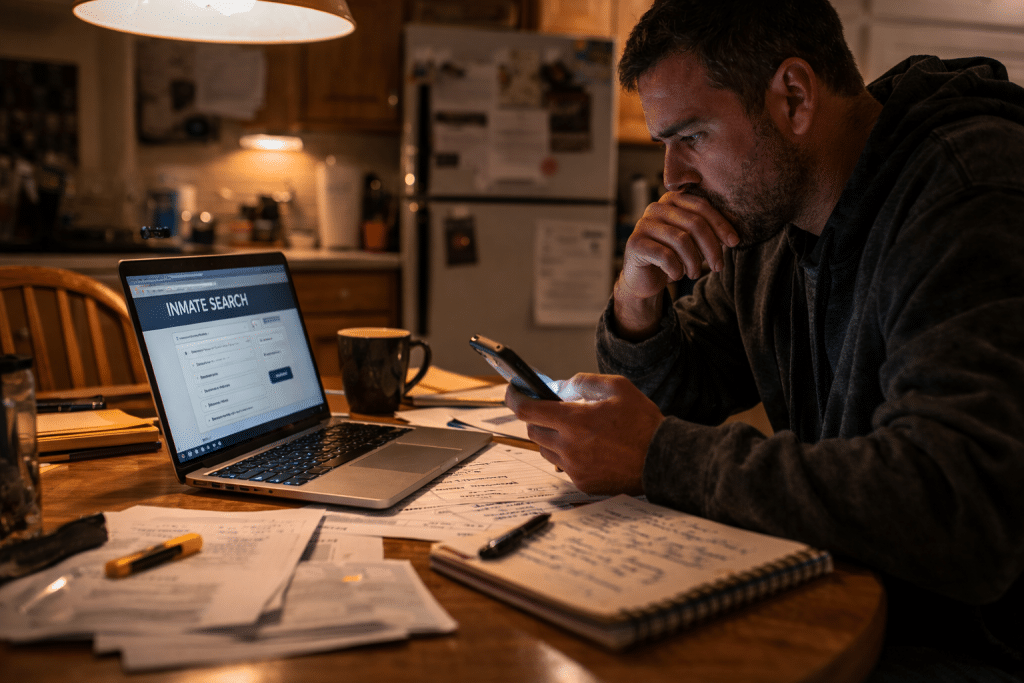
Real-time bail information comes from official sources. The El Paso County Sheriff’s Office website has a free inmate search tool. You can search by name or booking number to verify charges and bail amount.
For warrant information, call the Colorado Springs Municipal Court warrants office at (719) 385-6153. They handle bench warrants for people who missed court. You can also visit in person at 224 East Kiowa Street. Warrants often include an extra $40 fee on top of bail.
The Colorado Judicial Branch website provides legal forms like the JDF 370 Appearance Bond. This is the main form used for release.
Guide for Local Bail Bonds
A complete guide covers what happens after the bond is paid. Posting the bond is only half the process. The jail then begins out-processing, which takes two to six hours on average.
During this time, jail staff:
- Check for warrants from other agencies.
- Return the defendant’s personal property.
- Take new photos and fingerprints if needed.
- Provide release paperwork.
Colorado law says the jail cannot hold someone longer than six hours after bail is posted. This only applies if there are no other holds from other counties or states.
Complete Bail Bond Resource Springs
A full resource also covers costs and responsibilities. The premium you pay is the cost of the bondsman’s service. In Colorado Springs, this is typically 10% to 15% of the total bail amount. A $10,000 bail would cost $1,000 to $1,500 for the premium.
This fee is non-refundable. Even if charges are dropped later, the premium does not come back. The fee pays for work already done: paperwork, phone calls, travel to the jail, and taking on financial risk.
For higher bail amounts, bondsmen may ask for collateral. Collateral can be a car title, cash, or property deed. This protects the bondsman if the defendant runs.
Why Use a Bail Guide
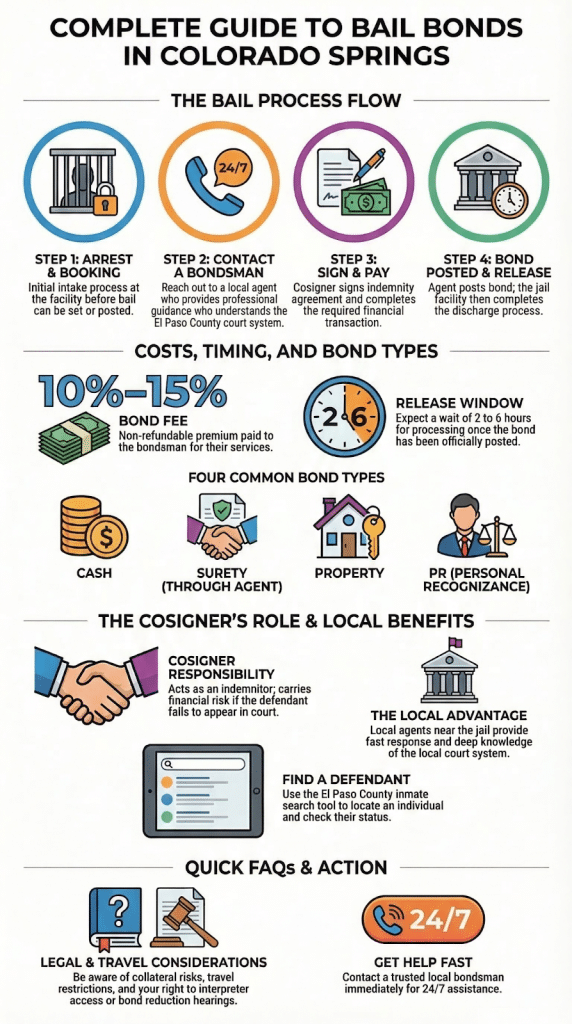
A bail guide helps you avoid mistakes. When someone is arrested, families often feel scared and confused. They might pay too much or trust the wrong person. A guide shows you the right steps.
“in a cash-bail system, the court permits an individual charged with a crime to go free pending their trial. In exchange, the court sets a cash amount, bail, that the person must pay to the court to ensure their appearance at trial. In this way, the cash bail operates as a kind of collateral: when the person appears, the court returns the money” – Steven D. Schwinn, professor at the University of Illinois Chicago School of Law
You also learn your rights. If a defendant stays in jail for several days only because they cannot afford bail, they can ask for a bond reduction hearing. A local bondsman can explain how to request this hearing.
Understanding the Local Bail Landscape
Colorado Springs has its own way of doing things. Recent state laws try to keep people out of jail if they cannot afford bail. But the rules can be confusing. Some releases come with conditions like alcohol monitoring or GPS tracking.
The courts are on South Tejon Street. The jail is on Las Vegas Street. Knowing where things are located helps you prepare. Local bondsmen understand which judges set which conditions and how to work within the system.
History of Colorado Springs Bail
Bail in Colorado Springs has changed over time. In the late 1800s, when the city grew as a mining and railroad center, many people passing through needed bail. Friends and family would vouch for each other, but that did not always work.
As the city grew, professional bondsmen became common. In the early days, there were few rules. Today, Colorado bondsmen must be licensed by the Division of Insurance. The old “wild west” days are gone. Now, strict laws protect defendants and make sure bondsmen act professionally.
Get Trusted Help With Bail in Colorado Springs
When someone you care about is in jail, the pressure to act fast is real. You are trying to understand bail, figure out the cost, and make the right call while the clock is ticking. Waiting only makes the situation harder. You need clear help right away.
That’s where Dennis Blackwell Bail Bonds comes in. The team works around the clock to help families post bail and move the process forward in Colorado Springs. When you call Dennis Blackwell Bail Bonds, you get local guidance from people who know the El Paso County system. If you need support right now, reaching out is the next step.
A Complete Guide to Bail Bonds in Colorado Springs FAQS
What happens to my cosigner if I miss a court date?
Your cosigner becomes responsible for the full bail amount. The bondsman can take their collateral, like a car or cash. They may also owe fees for locating you. Always call your bondsman immediately if you cannot make court. This can protect your cosigner from losing their property.
Can I travel outside Colorado while on bail?
You must get permission first. Some bonds allow travel, but others require you to stay local. Call your bondsman and lawyer before making plans. If you leave without asking, the court may see it as a violation. This could lead to a warrant and bond forfeiture.
What if the person arrested does not speak English well?
The jail and courts must provide free interpretation services. Tell the bondsman about the language need when you call. Never sign papers you do not fully understand. Ask questions until everything makes sense. The court will also have an interpreter at all hearings.
How does bail work if the defendant lives in another state?
Bail costs may be higher because the risk to the bondsman increases. You might need more collateral to secure release. The bondsman will check if the defendant has a job or family in their home state. The defendant must pay their own travel costs for court dates.
What should I do if I think the bail amount is too high?
Ask a lawyer to request a bond reduction hearing. At the hearing, the lawyer explains why bail is too high. The judge looks at job status, family ties, and criminal history. If you cannot afford bail, tell your lawyer. The judge may lower the amount.
References
- https://colorado.public.law/statutes/crs_10-2-418
- https://www.americanbar.org/groups/public_education/publications/insights-on-law-and-society/volume-21/issue-3/the-bail-bond-system-and-rule-of-law/