

When someone gets arrested in Colorado Springs, bail lets them get out of jail by paying money or using a bond. The person must promise to come back to court when told. Most people go to the El Paso County Criminal Justice Center after arrest.
A judge usually sets bail within 48 hours. Knowing how this works helps families act fast and stay calm. We will walk through each step so readers feel ready if bail is needed.
Key Takeaways
Here are three important things to know before we start.
- Bail decisions happen fast, often within 48 hours of arrest. Acting quickly can help get someone released sooner.
- A surety bond through a licensed bail agent is the most common choice when full cash bail is too much to pay.
- Missing a court date means losing the bond money and getting a warrant for arrest.
What Happens After an Arrest in Colorado Springs?
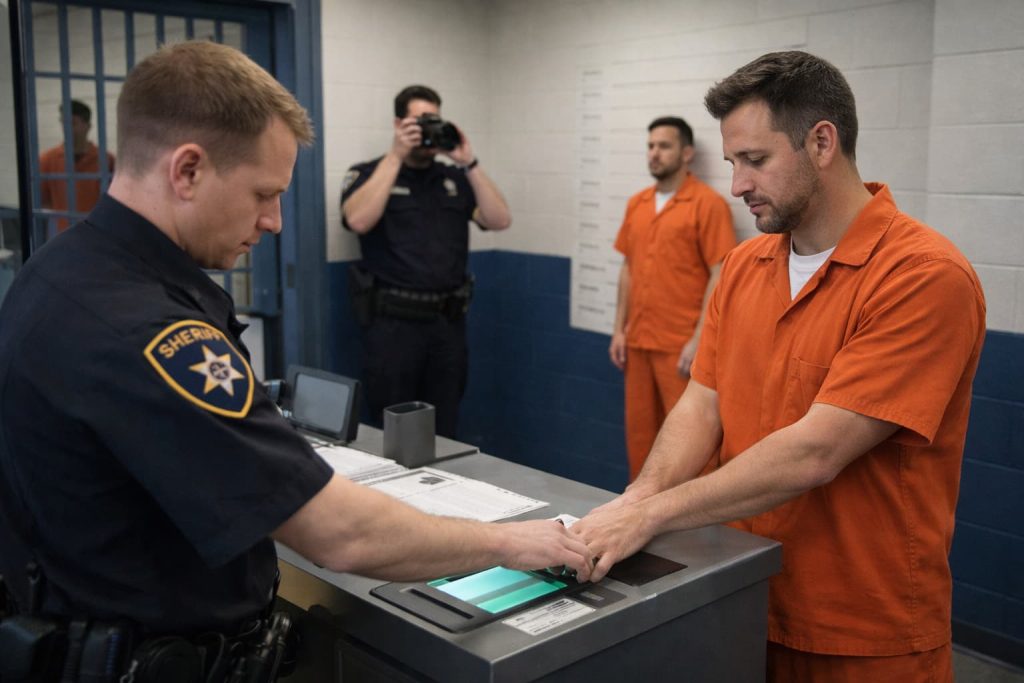
When law enforcement arrests someone, they take the person to the El Paso County Criminal Justice Center for booking. During booking, staff write down personal information, take fingerprints, and take a photograph. They also list the charges and check for any past arrests.
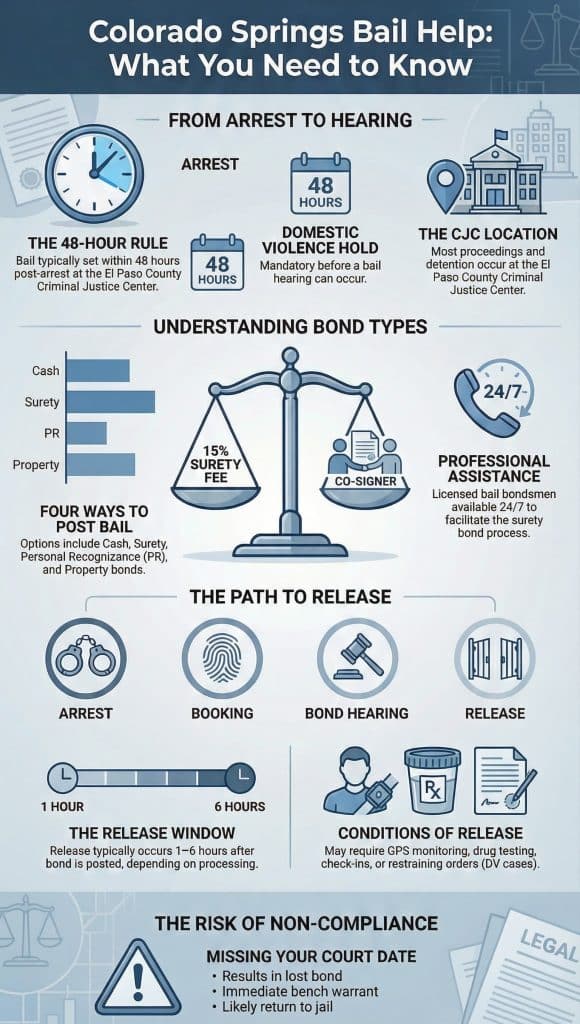
A bond hearing must happen within 48 hours. Colorado law requires this so people are not held longer than needed. A judge looks at the charges, the person’s ties to the community, and whether the person has missed court before. The judge also thinks about public safety. The Fourth Judicial District runs these hearings and follows clear rules for setting bail.
According to the Colorado Revised Statutes, Colorado law requires that,
“an in-custody arrestee be brought before a court for bond setting as soon as practicable, but no later than forty-eight hours after arrival at a jail or holding facility.”
After bond is posted, state law mandates release within six hours unless extraordinary circumstances exist .
What Types of Bail Bonds Are Available?

Courts in Colorado Springs offer different kinds of bonds. Each type has its own rules. The judge decides which type to allow based on the case and the person’s background.
Here are the most common bond types used in El Paso County:
- Cash Bond – The full bail amount must be paid in cash to the court. The money is returned at the end of the case, minus any fees or fines.
- Surety Bond – A licensed bail agent posts the bond for a fee. Colorado law sets this fee at no more than 15 percent of the bail amount.
- Personal Recognizance Bond – The person signs a written promise to come back to court. No money is paid upfront.
- Property Bond – The family uses real estate as collateral. The property must have enough value to cover the bail, usually one and a half times the amount.
Each option works for different situations. Cash bonds need a lot of money right away. Surety bonds give families a more affordable way to get someone released.
How Does a Surety Bond Work in Practice?
A surety bond means working with a professional bail bondsman. The bondsman posts bail for the person in jail. This option helps when the full cash amount is too high to pay.
The process starts when a family member calls a bail bond agency. The bondsman asks about the person in jail and the charges. Once the paperwork is signed, the bondsman files it with the jail. This can lead to a fast release, especially when the agency knows the El Paso County Criminal Justice Center well.
A co-signer is usually needed for a surety bond. The co-signer agrees to pay the full bail if the person misses court. Many agencies offer 24/7 bail bonds Colorado Springs services to help at any time of day.
What Factors Affect Bail Amount and Conditions?
Judges look at several things when setting bail. They want to make sure the person comes back to court and does not pose a danger. Every case is looked at on its own.
A risk assessment helps the judge decide. Serious charges often mean higher bail. The judge also checks if the person has missed court before. A history of missing court can lead to stricter rules or higher bail.
Research from the University of Northern Colorado confirms the importance of these evaluations. According to a study on the Colorado Pretrial Risk Assessment Tool, pretrial risk assessments provide an objective analysis of an arrested person to determine whether he or she will reappear in court or will be rearrested upon being released from jail.
This research was conducted with support from the Colorado Office of State Planning and Budgeting and has helped improve the accuracy of risk evaluations across the state .
The judge may add extra rules beyond the bail amount. These can include GPS tracking, electronic monitoring, drug testing, or regular check-ins with Justice Services. For domestic violence cases, a restraining order may be required. These rules help keep everyone safe while the case moves forward.
What Happens If Someone Misses Court?
Missing a court date creates serious problems. The court acts quickly when someone does not show up. The person who helped with bail can also face consequences.
Here are the typical results when a defendant misses court:
- Bond forfeiture – The full bail amount is lost. Any money or property used for the bond is at risk.
- Bench warrant – The court issues a warrant for arrest. Law enforcement can take the person back to jail.
- Bond revocation – The release is canceled. The person may be held without bail until the case ends.
If a court date is missed, fast action matters. An experienced bail bondsman may help with a process called consent of surety. This can sometimes get the bond back if the bondsman and court agree.
How Do Bail Bond Professionals Help Locally?
Bail bond professionals help families during stressful times. They explain the paperwork, court rules, and timelines. This support makes a hard situation easier to handle.
An experienced bail bondsman knows the local courts and the El Paso County Criminal Justice Center. That knowledge helps avoid delays that come from missing paperwork. Many agencies are located near the jail, so they can process releases quickly.
Dennis Blackwell Bail Bonds helps families understand their choices. The agency explains court requirements and what to do after release. Having a trusted professional to call reduces confusion and helps families focus on supporting their loved one.
Colorado Springs Bail Process Explained Simply
The bail process follows clear steps from arrest to release. Knowing these steps helps families know what to expect.
- Arrest and booking at the El Paso County Criminal Justice Center.
- Bond hearing within 48 hours.
- Judge sets bail and release conditions.
- Family pays cash, uses a surety bond, or qualifies for personal recognizance.
- Release from jail with rules set by the court.
Following these steps carefully helps avoid delays. Families who understand the process can act quickly when time matters.
Frequently Asked Questions
Can I bail someone out if I live in another state?
Yes, you can still help someone get released even if you live outside Colorado. Most bail bond agencies allow you to complete the paperwork remotely by fax, email, or secure online forms. You may need to provide identification and possibly a credit card for the premium payment. The bondsman will guide you through the steps to ensure everything is handled correctly from a distance.
What happens to the bail money if the charges are dropped?
If the court dismisses the charges, any cash bond paid to the court is usually returned in full, minus any administrative fees. For a surety bond, the premium you paid to the bondsman is not refundable because it was earned for posting the bond. If property was used as collateral, it is returned once the case ends and all court appearances were made.
How long does it take to get released after bail is posted?
Once the bondsman files the paperwork with the El Paso County Criminal Justice Center, release can take anywhere from one to six hours. The time depends on how busy the jail is and how quickly staff process releases. Colorado law requires release within six hours after bond is posted unless there are unusual circumstances. You can call the jail for updates while waiting.
What is a domestic violence hold and how does it affect bail?
A domestic violence hold is a mandatory period of detention after an arrest involving domestic violence. Colorado law requires the person to stay in jail for at least twelve hours after arrest before a judge can set bail. During this time, no bond can be posted. After the hold ends, a judge will set bail and may add a restraining order as a condition of release.
Can bail be changed after it is already set?
Yes, a judge can modify bail at later court hearings. A defense attorney can file a motion to ask for a lower bail or for release on personal recognizance. The court may agree if the person has followed all release conditions and does not pose a flight risk. Conversely, if someone violates release rules, the judge may increase bail or revoke it entirely.
What should I do if I am the co-signer and the defendant is not following court rules?
As a co-signer, you have a responsibility to report concerns to the bail bond agency immediately. If the defendant is about to miss court or break conditions, the bondsman may take steps to bring the person back to jail before the court issues a warrant. Acting early can protect your money and collateral. Always keep in touch with the bondsman if you have worries.
Final Guidance for Bail Help in Colorado Springs
Dealing with bail can feel overwhelming when a loved one is in jail. We can handle the situation better by knowing the timelines, bond types, and rules. Acting fast after an arrest often leads to a smoother release.
If you need help, reach out to a trusted bail professional. Dennis Blackwell Bail Bonds offers 24/7 bail bonds Colorado Springs services to guide families through every step. Visit the website to learn how experienced help can make a difference.
References
- https://law.justia.com/codes/colorado/title-16/code-of-criminal-procedure/article-4/part-1/section-16-4-102/
- https://www.unco.edu/news/articles/researchers-improve-bail-risk-assessment-tool/